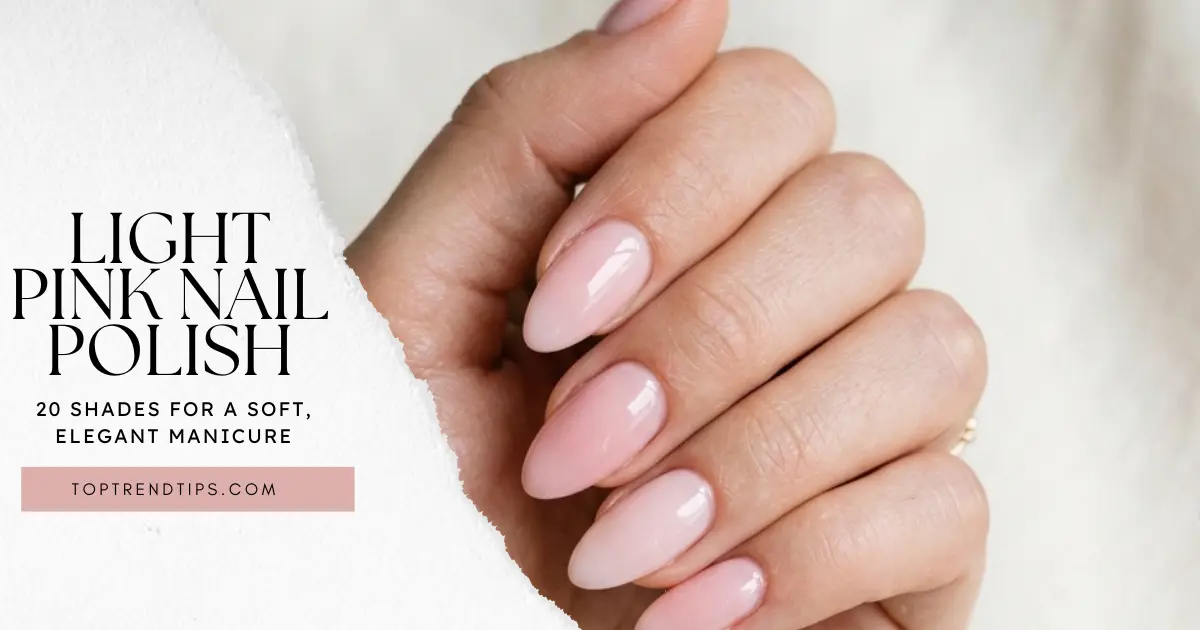
Light pink is one of those nail colors that never really goes out of style — but it’s also more complicated than it looks. Two bottles that seem almost identical on the shelf can turn out completely different once they’re on your nails. A sheer ballet pink gives you a clean, barely-there manicure, while a warmer blush pink softens your hands in a totally different way.
Part of the challenge is that “light pink” isn’t really one color — it’s a whole family of them. Some lean blue or lilac, some lean peach or beige, and some are so sheer they barely change your natural nail color at all.
To make the choice a little easier, here’s a rundown of 20 light pink nail polish shades and finishes, how undertones change the way pink reads on different skin tones, and a few practical tips for getting a smooth, salon-worthy finish at home.
Understanding Light Pink Undertones
Before you pick a bottle, it helps to know what undertone you’re actually looking at. Two pinks can be nearly the same depth and still look nothing alike once applied.
Cool-Toned Light Pinks
Cool pinks carry a hint of blue, lilac, or rose. They tend to look crisp and a little more delicate, and they usually suit cool or pink-toned skin especially well.
Examples include:
- Ballet pink
- Blue-based baby pink
- Lilac pink
- Cool dusty rose
Warm-Toned Light Pinks
Warm pinks lean peach, beige, coral, or gold, and they often come across as more nude than pink.
Examples include:
- Peachy pink
- Beige pink
- Warm blush
- Champagne pink
Neutral Light Pinks
Neutral pinks sit right in the middle — not pulling noticeably blue or yellow. If you’re not sure what your undertone is, these are usually the safest place to start.
Sheer and Milky Pinks
Sheer and milky pinks aren’t really about undertone at all — they’re defined by how much coverage they give. Both create a clean, natural look and have become go-to choices for minimalist manicures.
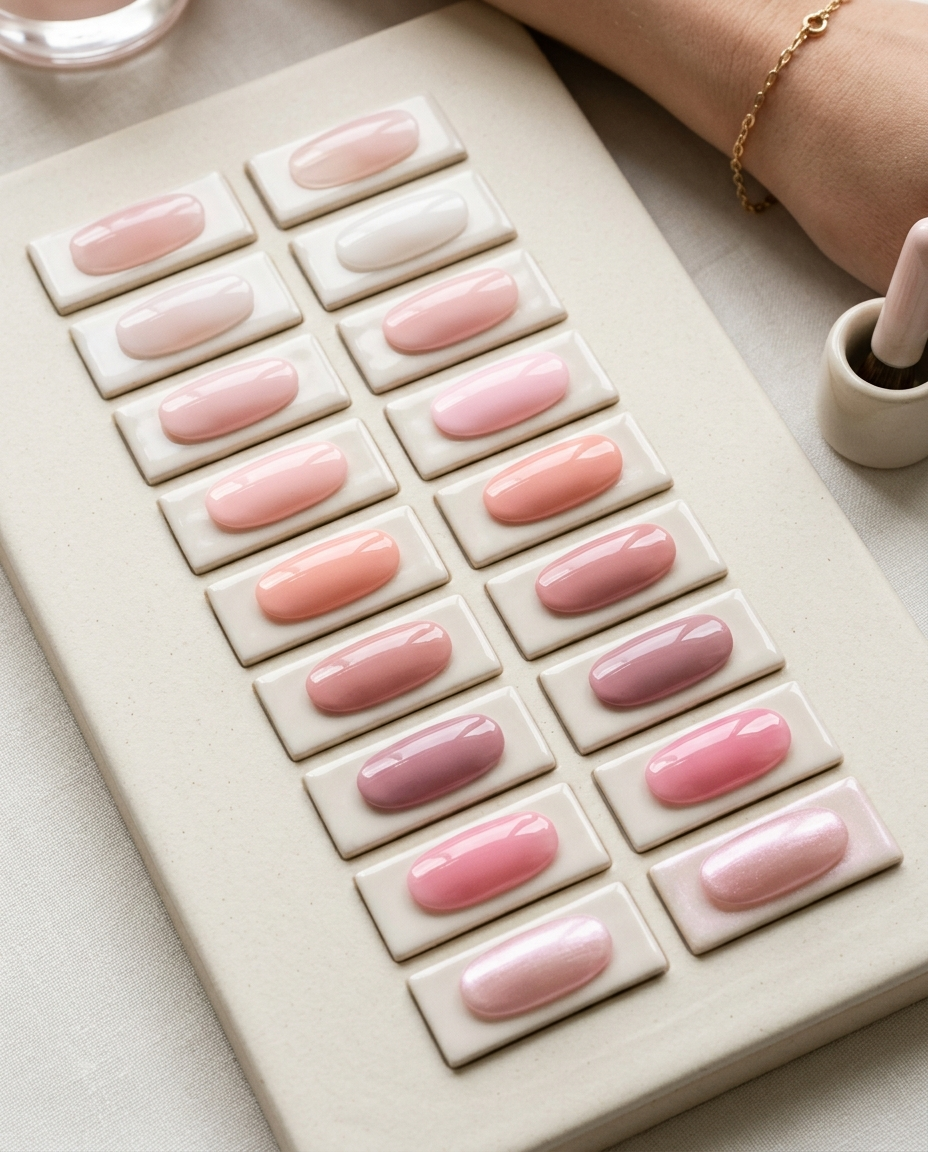
20 Light Pink Nail Polish Shades Worth Trying
1. Classic Ballet Pink
Ballet pink is probably the most recognizable shade in this whole category — soft, a little cool, and quietly elegant.
Best for: Minimalist manicures, work, weddings Finish: Sheer to semi-sheer Look: Clean and timeless
It’s a solid pick when you want your nails to look put-together without the color stealing the show.
2. Essie Ballet Slippers
This one is practically shorthand for “sheer pink manicure” at this point — soft, understated, and easy to wear.
Best for: Natural-looking manicures Finish: Sheer Look: Barely-there pink
Because sheer formulas react to your natural nail color, build it up in thin layers rather than trying to get full coverage in one go.
3. Milky White-Pink
Milky pink blends soft pigment with a creamy, almost white base, giving nails a smooth, polished look without going fully opaque.
Best for: Clean-girl and minimalist manicures Finish: Milky Look: Soft and polished
It’s versatile enough to wear with a T-shirt or a blazer.
4. Baby Pink
Baby pink is a step up from a sheer ballet shade — still light, but with enough pigment that it actually reads as “pink” from across the room.
Best for: Everyday wear Finish: Cream or glossy Look: Fresh and youthful
Good choice if you want visible color rather than a whisper of it.
5. Peachy Pink
Take a light pink, warm it up with a touch of peach, and you get this shade.
Best for: Warm and neutral undertones Finish: Cream or glossy Look: Soft and warm
It’s a nice alternative if cooler, blue-based pinks tend to wash your hands out.
6. Blush Pink
Blush pink mimics the color of a natural flush — anywhere from sheer and subtle to a bit more saturated, depending on the formula.
Best for: Everyday manicures Finish: Glossy or sheer Look: Natural and feminine
Go slightly deeper if you want the color to stay visible without looking loud.
7. Soft Rose Pink
A muted pink with just enough saturation to register without ever looking bright.
Best for: Office and everyday wear Finish: Creamy Look: Sophisticated
Think of it as the middle ground between a pale nude and a classic medium pink.
8. Neutral Pink
A true, balanced pink that doesn’t pull blue, peach, or beige in any obvious direction.
Best for: Anyone unsure about their undertone Finish: Cream or glossy Look: Classic
If this is your first light pink polish, it’s one of the safest places to start.
9. Sheer Petal Pink
More of a translucent wash of color than full coverage.
Best for: Minimalist manicures Finish: Sheer Look: Natural and delicate
One coat gives you a subtle tint; two or three thin coats bring out more color.
10. Beige-Pink Nude
A pink built on a beige base — somewhere between a classic pink and a true nude.
Best for: Warm and neutral undertones Finish: Creamy Look: Polished and understated
Great option if you want the manicure to look close to your natural nail color, just a little more finished.
11. OPI Bubble Bath
The go-to for a lot of people when they picture a soft, effortless pink manicure.
Best for: Natural-looking nails Finish: Sheer to soft coverage Look: Elegant and subtle
Like most sheers, the final result depends on how many coats you use and your own nail color underneath.
12. Dusty Pink
A muted pink with a touch of gray or mauve running through it.
Best for: Sophisticated everyday manicures Finish: Cream or glossy Look: Muted and elegant
If regular baby pink feels a little too sweet, this is the grown-up version.
13. Lilac-Pink
Leans noticeably purple or blue while still staying light and wearable.
Best for: Cool undertones Finish: Cream or sheer Look: Delicate, slightly modern
Looks especially good under a glossy top coat.
14. Champagne Pink
A light pink base with subtle beige, gold, or pearl undertones running through it.
Best for: Weddings and special occasions Finish: Shimmer or pearlescent Look: Soft and luminous
A nice way to add a bit of interest without reaching for glitter.
15. Pearlescent Pink
Has a soft reflective quality that catches the light without tipping into full-on sparkle.
Best for: Special occasions and evening manicures Finish: Pearl Look: Luminous
That subtle shimmer can also help a very pale pink stay visible on deeper skin tones.
16. Jelly Pink
Translucent and glossy rather than flat and opaque — almost like colored glass.
Best for: Trend-forward manicures Finish: Jelly Look: Glossy and fresh
Since it’s translucent, your natural nail color will show through and shape the final look.
17. Soft Mauve-Pink
Light pink with a touch of purple or gray mixed in.
Best for: Cool and neutral undertones Finish: Creamy or glossy Look: Refined
A good option when you want pink to feel a little more grown-up and less sugary.
18. Cotton Candy Pink
Brighter and more saturated than a classic ballet pink, but still on the lighter end of the spectrum.
Best for: Fun, everyday manicures Finish: Cream or glossy Look: Playful
Go softer for something subtle, or more saturated if you want it to stand out.
19. Opal Pink
Usually sheer to semi-sheer, with fine shimmer particles mixed in.
Best for: Weddings, parties, and special occasions Finish: Shimmer Look: Soft and glowing
The trick is keeping the shimmer fine and subtle rather than reaching for anything chunky.
20. “Your Nails, But Better” Pink
A category rather than one specific shade — light pinks designed to enhance your natural nail rather than cover it completely.
Best for: Office, everyday wear, minimalist styles Finish: Sheer or milky Look: Clean and natural
Ideal if you like your nails to look polished but not obviously painted.
Light Pink by Finish
The finish changes the whole personality of a light pink manicure just as much as the shade does.
Sheer lets some of your natural nail show through — great for minimalist looks and professional settings. Milky has more white pigment mixed in, giving a soft, creamy finish. Cream gives you stronger color payoff while still keeping that classic light-pink feel. Jelly is translucent and glossy, and reads a bit more modern. Shimmer or pearlescent finishes catch the light, which can help very pale shades stand out instead of disappearing.
Choosing Light Pink for Your Skin Undertone
Your undertone usually matters more than how “deep” or “fair” your skin is overall.
| Skin Undertone Light Pink Family to Try Good Options | ||
|---|---|---|
| Cool | Blue-based and rosy pinks | Ballet pink, lilac-pink, dusty rose |
| Warm | Peach and beige pinks | Peachy pink, champagne pink, beige-pink |
| Neutral | Balanced and milky pinks | Neutral pink, baby pink, milky pink |
| Olive | Muted neutral and beige pinks | Dusty pink, beige-pink, soft rose |
| Deeper skin tones | Visible, balanced, or slightly richer pinks | Baby pink, pearlescent pink, soft rose |
Fair skin: Very pale pinks can look especially delicate here — cool ballet pink, sheer petal pink, or a soft blush all work well. If your skin runs warm, try peachy or beige-based pinks instead of icy ones.
Medium skin: You’ve got room to play with both cool and warm pinks. Neutral pink, soft rose, baby pink, and peachy pink are all easy choices.
Olive skin: Very yellow or very blue pinks can sometimes look a bit off here. Muted rose, beige-pink, and neutral shades tend to be more reliable.
Deeper skin tones: Both soft and more saturated pinks work well. Very sheer or milky shades give a subtle contrast, while richer baby pinks, pearlescent finishes, or soft rose make more of a statement. It really comes down to how much contrast you’re after.
Light Pink for Different Occasions
Everyday wear: Sheer pink, baby pink, blush, or soft rose — easy to wear, easy to match with anything. Work and the office: Milky pink, sheer petal pink, neutral pink, or beige-pink for a polished, low-key look. Weddings: Ballet pink, milky pink, champagne pink, or pearlescent pink all feel appropriate and elevated. A trendier look: Jelly pink, pearlescent pink, opal pink, or a subtle shimmer finish can take a classic light pink somewhere a little more modern.
Getting a Flawless Light Pink Manicure
Here’s the thing about light pink polish — it’s unforgiving. Ridges, streaks, and uneven patches that a dark red would hide completely tend to show up clearly under a pale pink.
Start with clean nails. Remove old polish and wipe away any oils before applying your base coat — oil is one of the biggest reasons polish doesn’t stick properly.
Use a ridge-filling base coat if you need one. It smooths out the surface so pale polish goes on more evenly.
Apply thin coats. Two or three thin layers will always look better than one thick one, especially with sheer or milky formulas. Give each coat a little time to set before adding the next.
Cap the free edge. Running a thin line of polish along the tip of the nail helps prevent early chipping.
Finish with a glossy top coat. It evens everything out and adds shine.
Making Light Pink Work for You
The shade is only part of the equation. A few things to keep in mind:
- Match it to your undertone. If a pink keeps looking too blue or too yellow on you, try something more neutral.
- Think about opacity. Sheer formulas show more of your natural nail; opaque ones give you stronger, more consistent color.
- Consider contrast. If you want the color to really stand out against deeper skin, skip the palest sheer shades and go for something richer or reflective instead.
- Keep your nail shape clean. Light pink looks its best on nails that are neatly shaped and even.
- Don’t trust the bottle alone. Swatch it on a real nail first — lighting and your natural nail color can change how a shade actually looks.
Frequently Asked Questions
What’s the best light pink for a natural look?
Sheer, milky, and soft blush pinks are usually your best bet. A neutral pink that suits your undertone can also look polished without feeling dramatic.
Is there a light pink that works for every skin tone?
A balanced neutral pink comes closest, since it doesn’t lean strongly blue or peach. Milky and soft rose shades are versatile too, though the result still depends on opacity and undertone.
Is light pink appropriate for the office?
Yes — sheer, milky, beige-pink, and neutral pink are all easy, professional choices.
Does light pink work on short nails?
Definitely. Sheer, milky, and glossy finishes tend to look especially clean and can even make short nails appear a bit longer.
How do I stop light pink from looking streaky?
Use a smoothing base coat and apply two or three thin coats instead of one thick one. Letting each layer dry properly makes a real difference.
Does light pink polish yellow over time?
Very pale or white-based formulas can sometimes yellow slightly from sunlight, staining, or certain product combinations. Keeping polish out of direct sun and using compatible top coats can help it stay true.
What’s the difference between light pink and nude polish?
Light pink stays within the pink family. Nude polish is meant to echo or complement your natural skin tone, and can range from beige to tan to brown to pink-based.
How many coats do I actually need?
It depends on the formula. Sheer shades usually need two to three thin coats, while opaque creams can look finished after just one or two. Thin layers almost always beat one thick one.
Final Thoughts
Light pink nail polish covers a lot more ground than people usually give it credit for. You can go sheer and ballet-pink for something almost invisible, warm it up with peach for a softer feel, keep it milky for a clean finish, or add pearl for a bit of shimmer.
The easiest way to narrow it down is to start with your undertone, then decide how much coverage and shine you actually want. If you’re still not sure, a neutral or soft rose pink is a safe, reliable starting point — and from there, sheer and milky finishes lean minimalist, while baby pink, jelly, pearlescent, and opal finishes give you a bit more presence.